
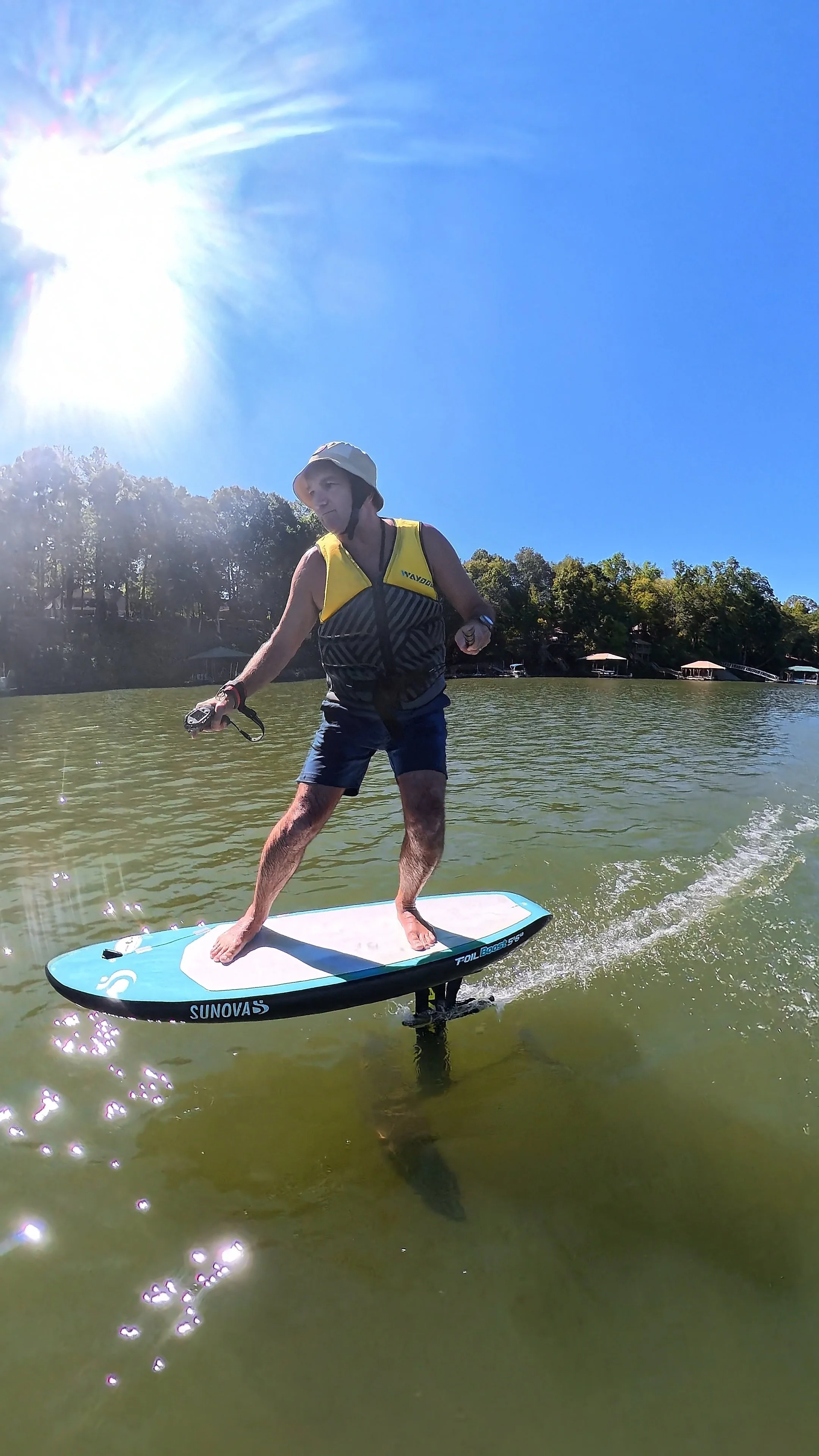
Waydoo Foilboost Review: Boosting Foiling To The Next Level
I started wakefoiling in 2018. As an avid surfer living hours from the coast on a lake in Charlotte, NC, I craved a fix for my love of surfing. It started with wakeboarding, but speed and age made that less and less fun. That evolved into wakesurfing, which I love to do. After years of wakesurfing and learning to do 360s and other tricks, I was ready for a new challenge.
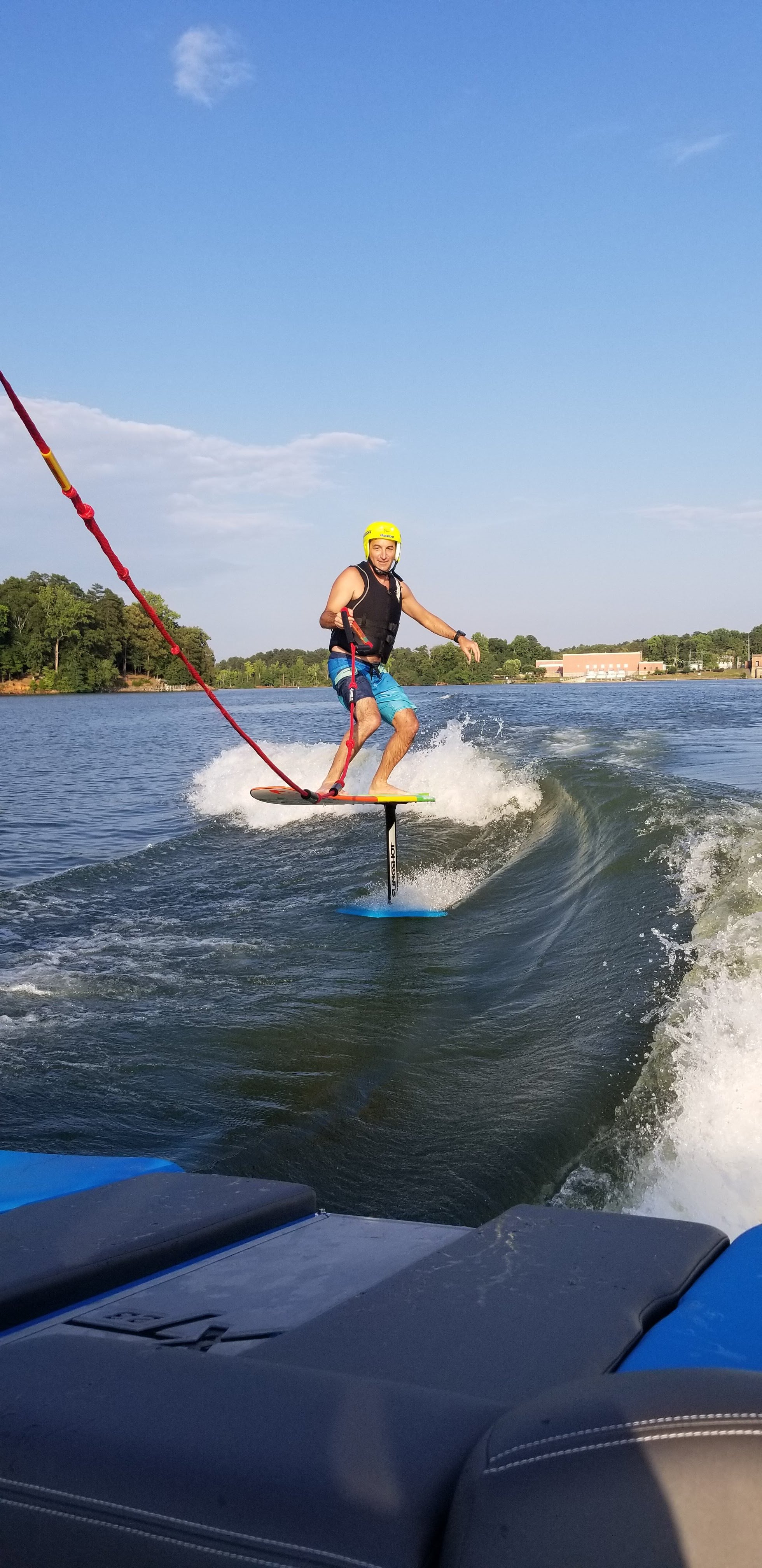
In 2017, a friend of mine who worked for a wakeboard dealer brought out a demo Slingshot wakefoil. Despite our crew being proficient wakesurfers, we all struggled mightily to get up on the foilboard. The dynamics are so different. It is almost like riding one of those trick bicycles where the handlebars are reversed so you turn right to go left. In wakesurfing, your front foot is the gas and backfoot is the brake. As we soon learned in foiling, the backfoot creates lift and the front foot slows you down. A brain rewire was required. I bought a Slingshot foil not long after that, as I was determined to master the sport. Eventually, I did, progressing to riding the 2nd and 3rd wave back and upgrading to higher-performance equipment along the way.
In 2020, I got my first efoil from Waydoo. I launched from my dock and didn’t fall on my first ride. As a proficient wakefoiler, this was easy. The large board, stable wing, and the fact that I could control the speed and not need to stay in the right spot on a wave made it so much simpler. I love to efoil and have gotten good at chasing boat wakes with my folding prop.
Enter the Foilboost
The next move in my boardsport evolution seemed very natural: try a foil with a boost kit. When Waydoo introduced the Foilboost, I knew I had to try one. After a patient year of waiting and watching others jealously ride the Foilboost, I finally got one. The idea of using the Foilboost to chase wakeboat waves and to take it in the ocean to chase swells was just too compelling.
Given my experience with Waydoo efoils, I knew I was getting a high-quality, well-designed product. I was an original Waydoo Kickstarter backer (#52) with their Waydoo Flyer One. I upgraded to a Waydoo Flyer One Plus, and now I ride their master series Waydoo Evo board. Waydoo has continued to push the price-to-performance ratio of their products, and I expected the same from the Foilboost.
The Foilboost starts at $2,900, which is significantly less expensive than Foil Drive and other competitors that start around $4,000.
Unboxing and Hardware
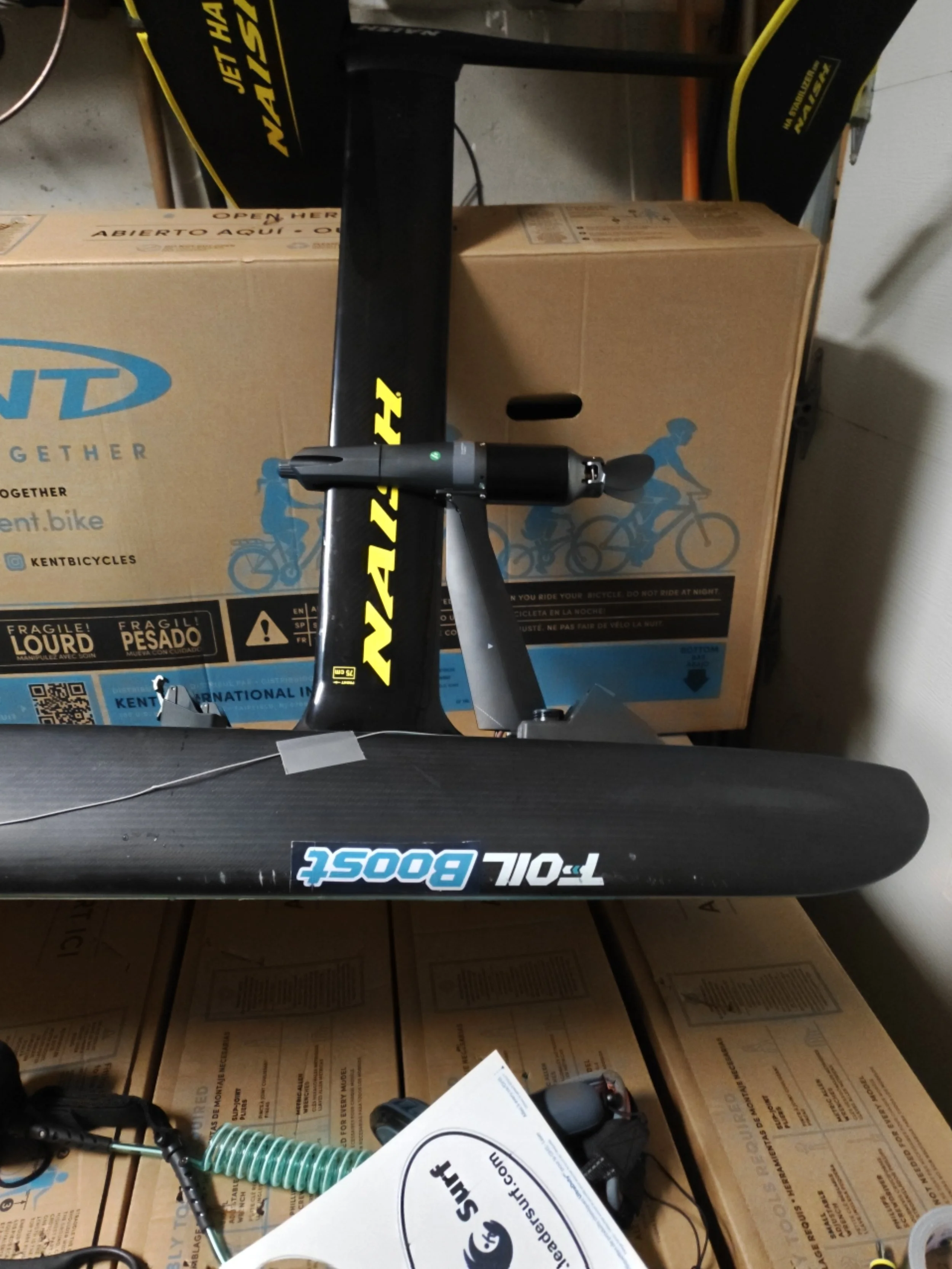
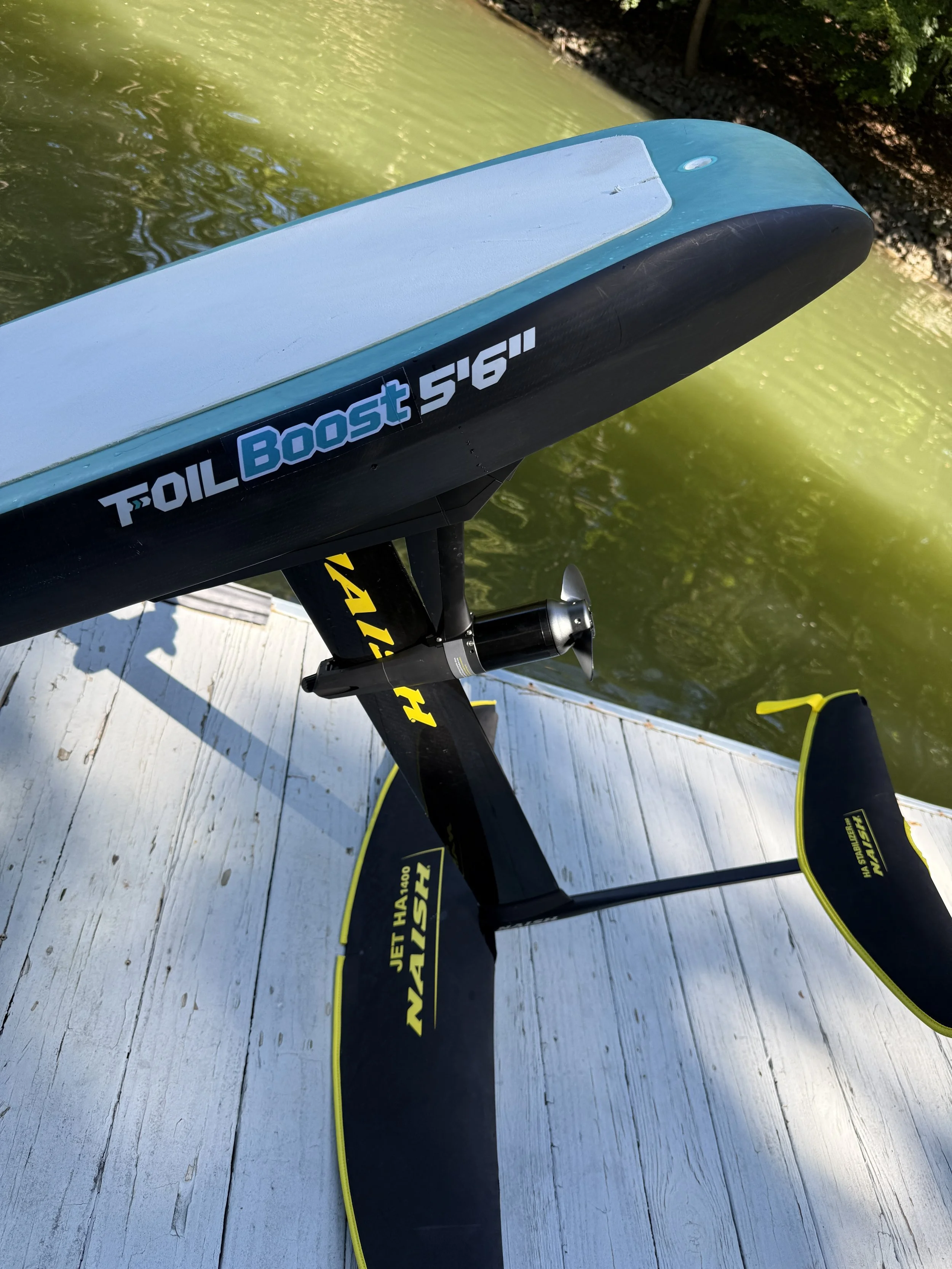
The Waydoo Foilboost comes in a well-padded box with all the parts necessary for several different applications. Waydoo says the Foilboost is compatible with 98% of masts, and I can verify that it fits perfectly with my Naish S26 Carbon mast.
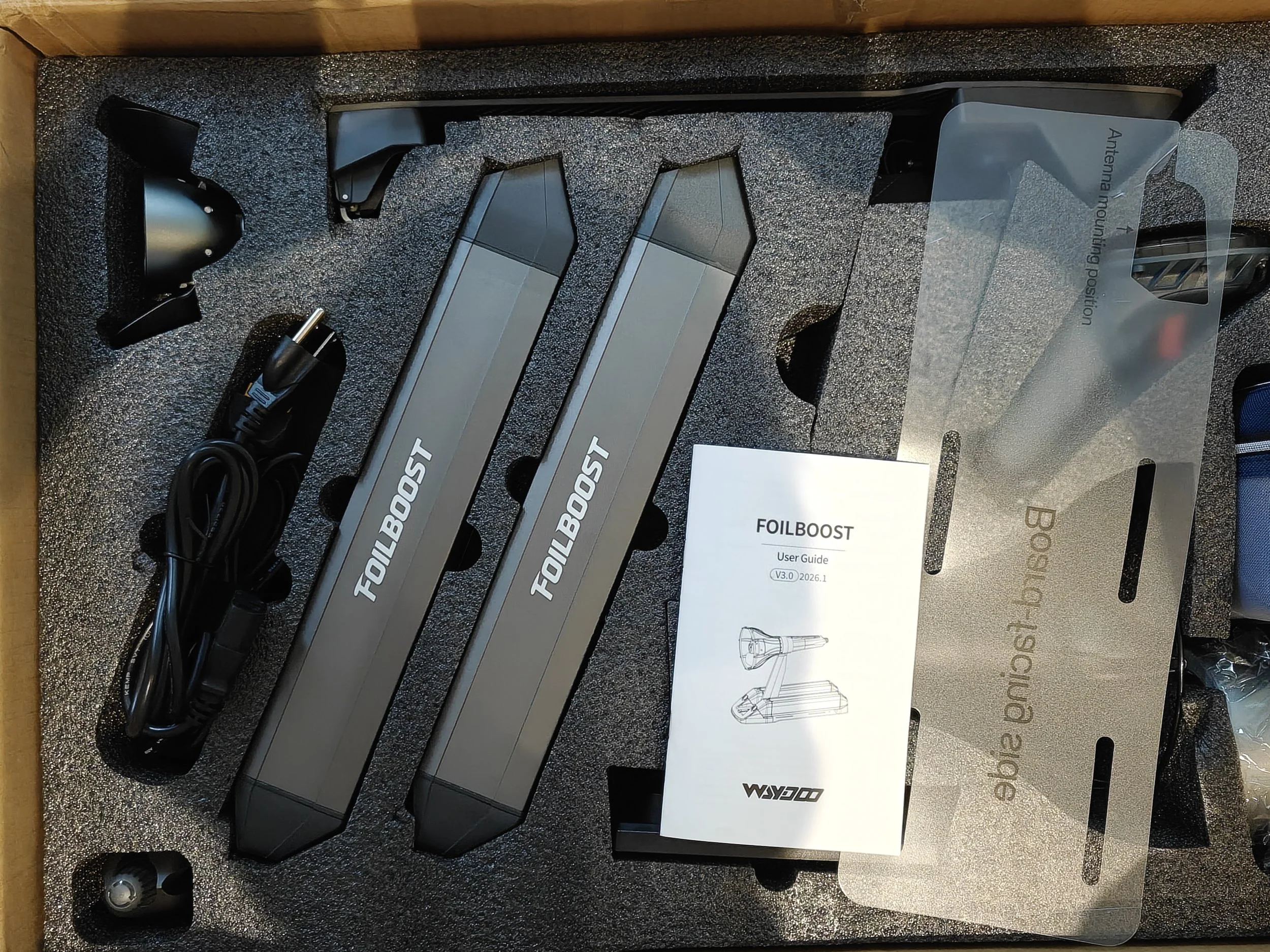
The design is clever, as it comes with two folding propellers: one for forward mounting and one for rear mounting. The forward mount position can help with forward downward pressure on the board, but as an experienced foiler, I opted for the rear-facing configuration for my first rides and I removed the prop guard.
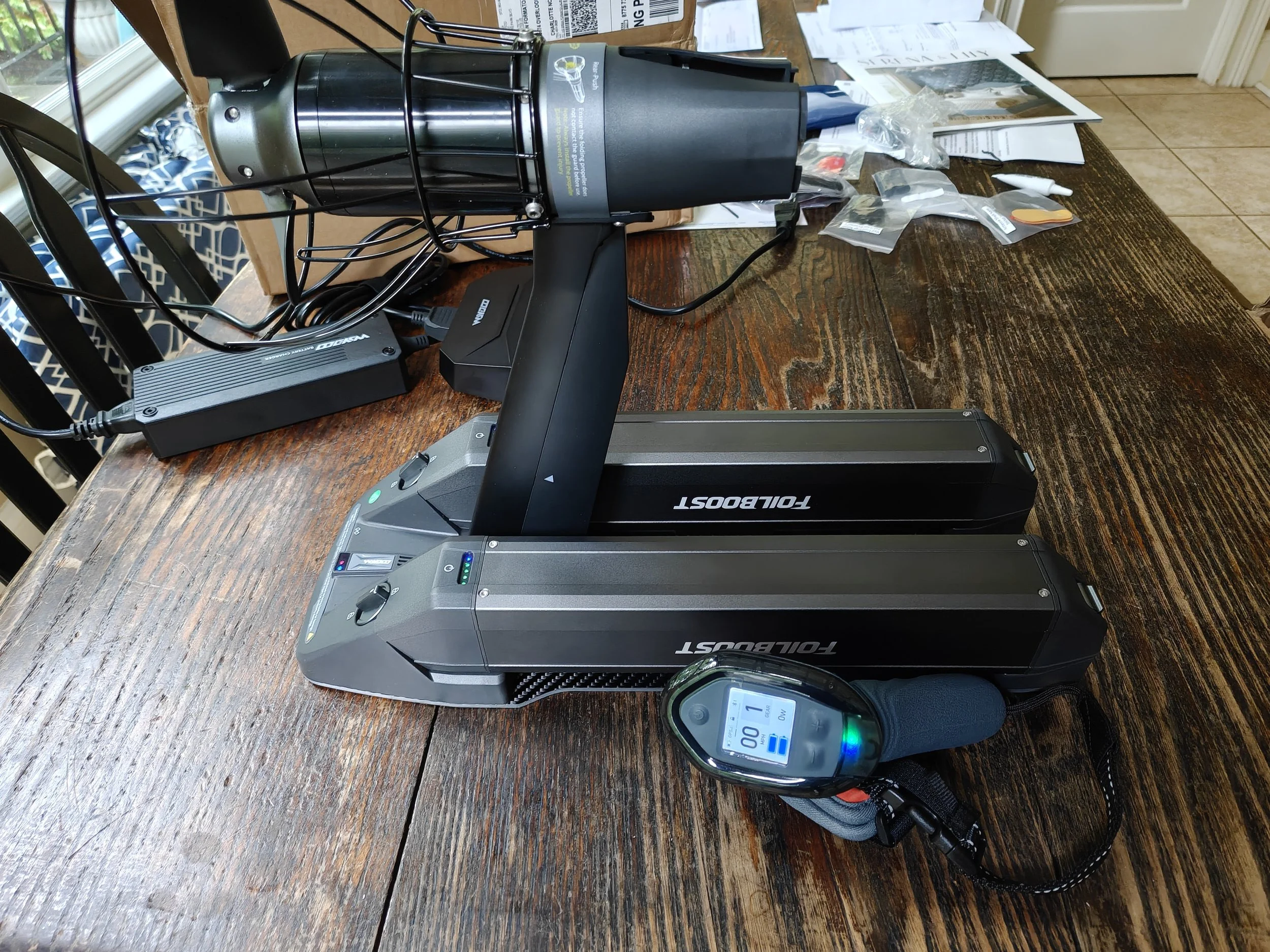
The Foilboost also allows for mounting the drive at the bottom of the mast by the wing, like an efoil, for situations where you are going to stay under constant power. My goal is to ride unpowered as much as possible, so I have stuck with the high mount point by the bottom of the board.
Key Tech Specs & Inclusions:
Signal Reliability: Waydoo includes a coupling antenna, as many carbon boards will block the Bluetooth signal. The antenna mounts on the nose of the board, ensuring the signal stays constant.
The Controller: The remote looks exactly like the Waydoo Evo remote with a full-color screen. The remote software is quite different, as there are only 3 gears versus 24, and the settings are different. It is ergonomic and feels great in the hand.
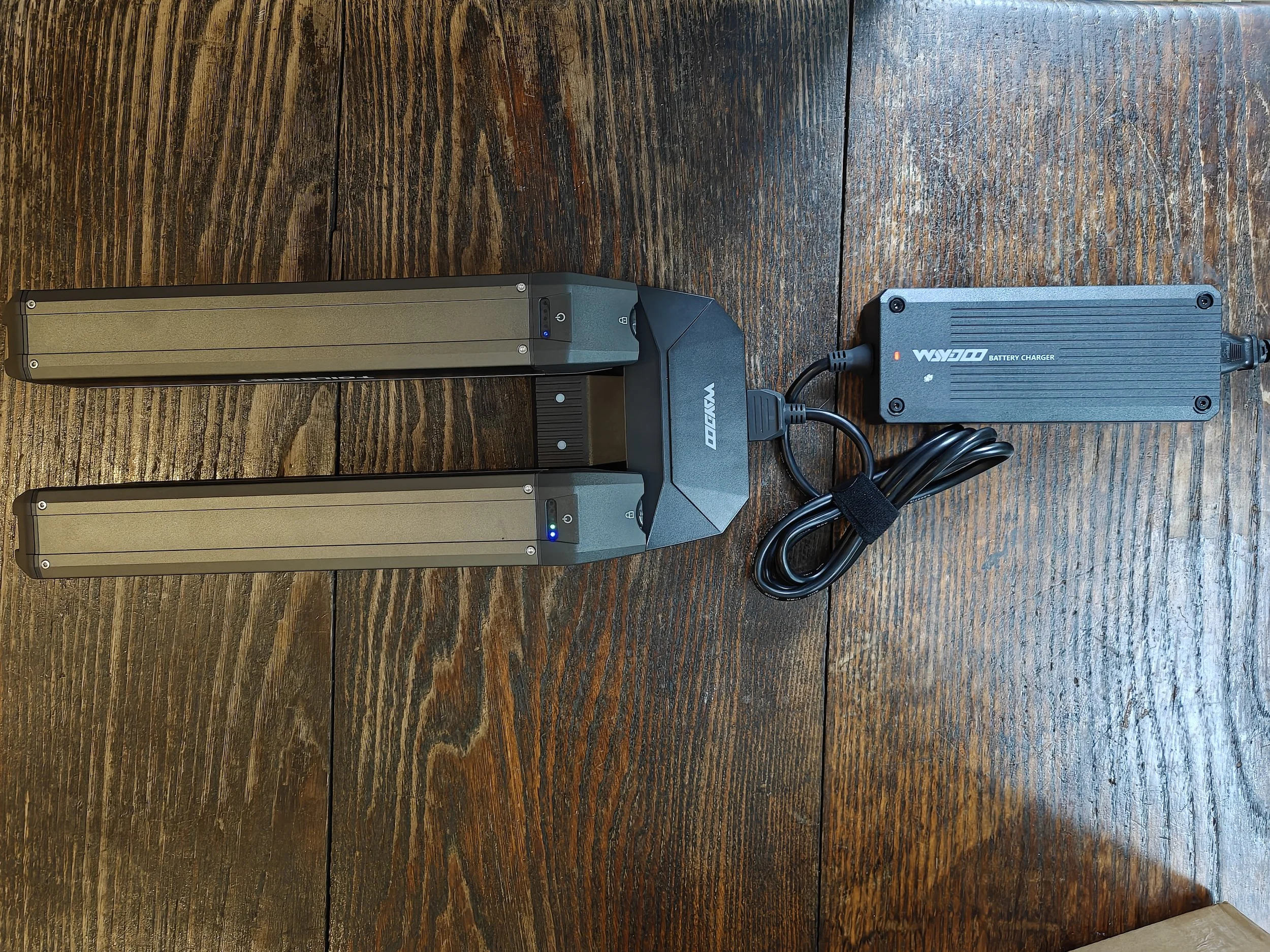
Travel-Ready Batteries: The kit includes a battery charger and two batteries. By having two batteries that work together, the size is kept down to comply with several airlines, making the kit travel-ready.
Weight: The total weight of the Foilboost kit with the two batteries is 12.3 lbs (5.6kg). Attached to the board, this is significantly lighter than the Waydoo Evo, which comes in closer to 70 lbs with the battery, board, and mast.
The Setup
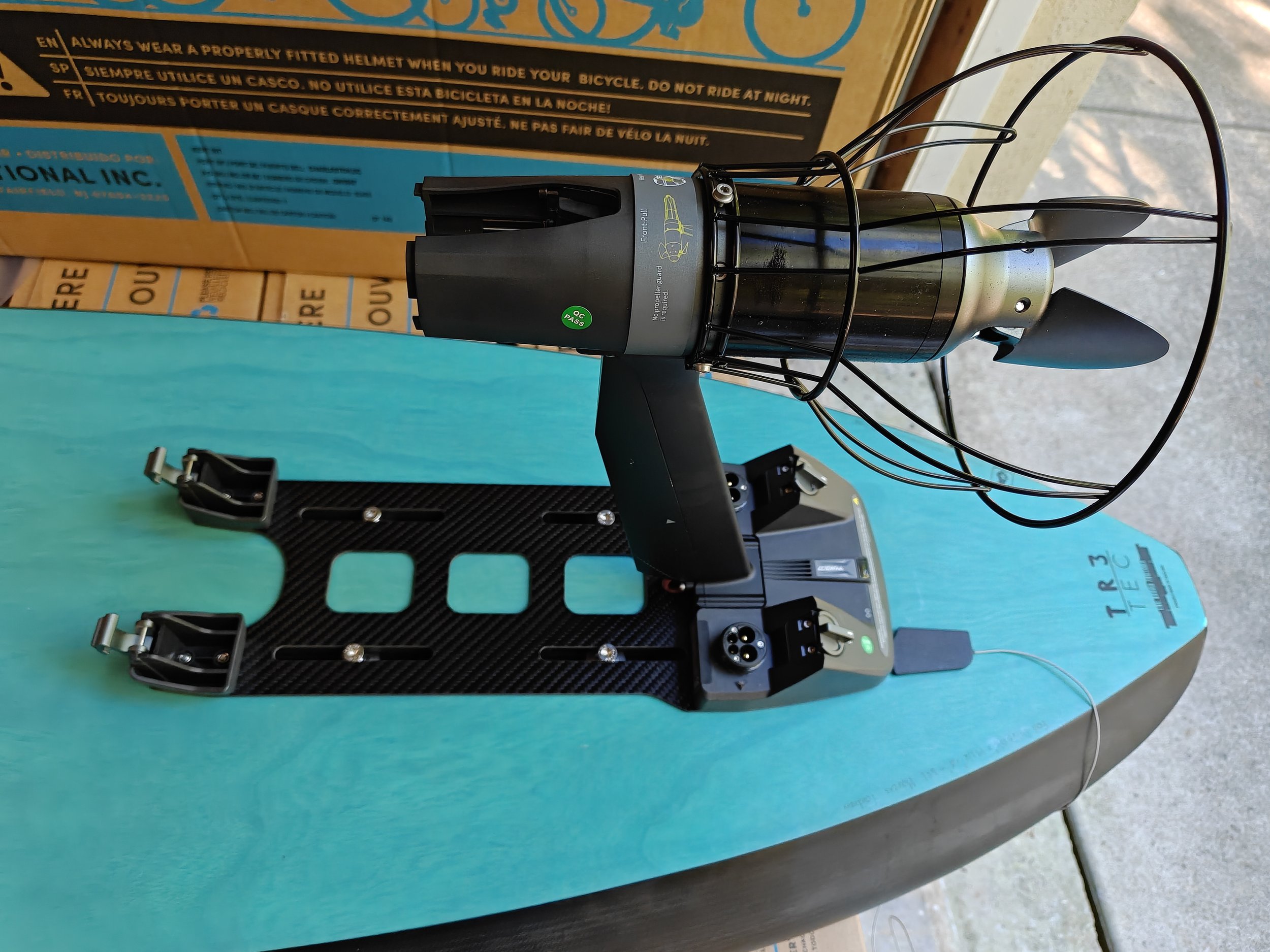
Attaching the Foilboost to the board was quite simple and intuitive. Included is a mounting template that fits over the foil track on the bottom of the board to determine the position of the antennae transmitter. I began by sticking the antennae receiver to the bottom of the board according to the template. Next, I inserted the mounting screws in the tracks and set the Foilboost mount over the tracks. I took my Naish S26 mast and aligned it with the Foilboost and the mounting screws. My screws were pretty short, but I was able to securely mount the mast with the Foilboost to the board.
Launching
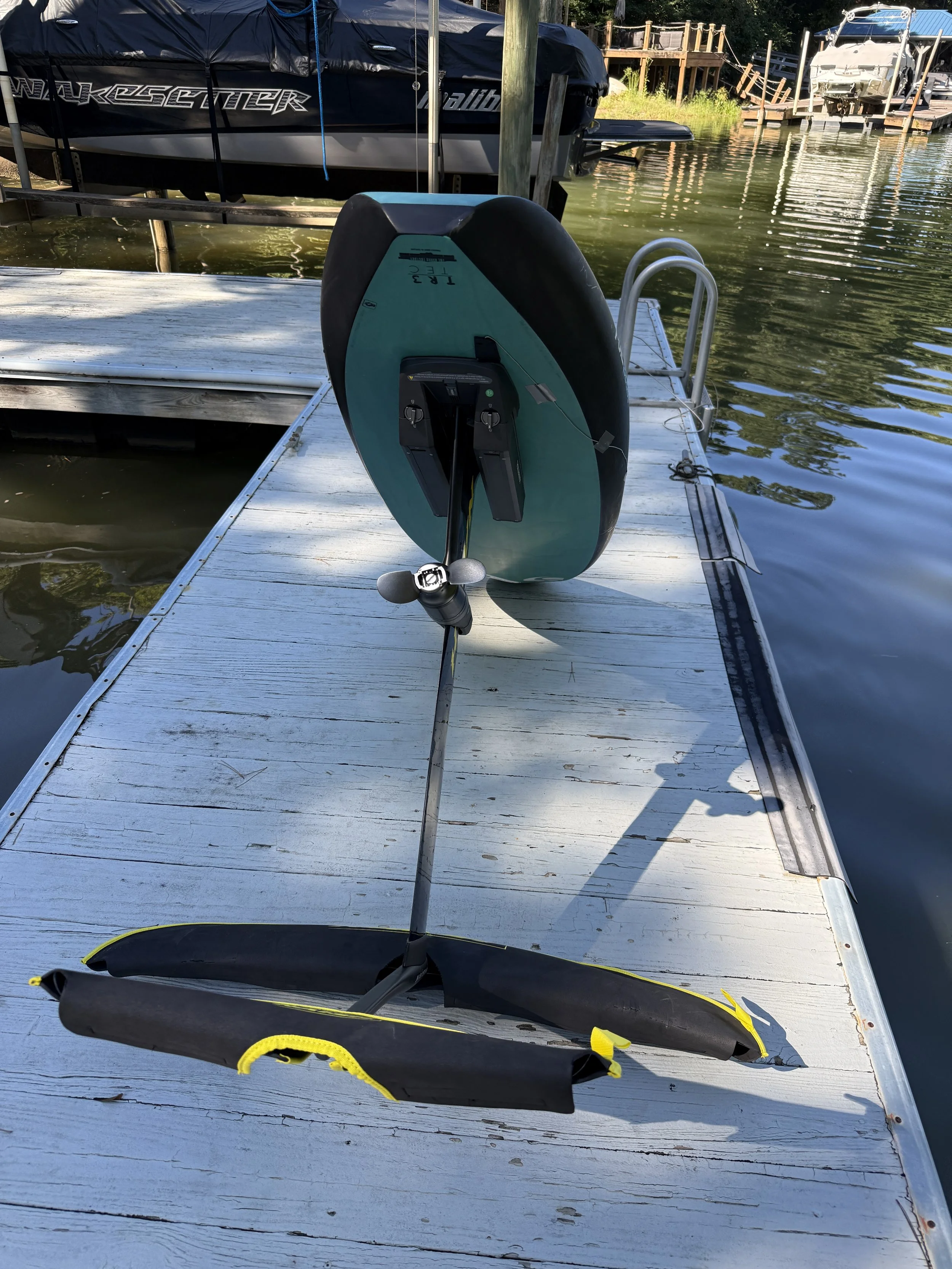
With my Waydoo Evo, it requires two trips down to the dock as the entire setup with the battery is over 60 lbs, so I take the battery separate from the board, mast, and wing. With the Foilboost attached to my 62 liter Sunova board, I slung it over my shoulder and had no issue carrying it. The entire setup with the board, Foilboost, batteries, and mast/wing setup is under 30 lbs. So much lighter and easy to transport.
I turned on the remote, which looks identical to the Waydoo Evo efoil remote. I did notice the software on the remote is different. I set the display to MPH, changed the remote lockout time to 30 seconds, and set the low battery warning to 20%. This was easy to navigate in the menu.
The remote screen is customizable, but the default is to show speed, gear, battery level for each of the two batteries, wattage use when underway, Bluetooth connectivity, and remote battery level. My one complaint, which was also true when the Waydoo Evo launched, is that the battery level is shown as two blue bars without showing the actual battery percentage. Waydoo addressed this with the Evo via a firmware update. I hope the same is true for the Foilboost, as it would be nice to see the actual battery percentage.
With my Waydoo Evo, I can easily dock start to launch. I spent a lot of time determining what size board to purchase for use with the Foilboost. Given that I live on a lake, much of my riding will be chasing wakeboat waves in fresh water. I do plan to use it in the ocean occasionally to chase ocean swells, but that will be less frequent. Fresh water is less buoyant, so I knew I needed to get a board with a bit more volume. Expert foil assist riders ride boards in the 40-liter size, but for my application, I went conservative and bought a 62-liter board.
The first advantage I noticed with the extra liters was that I was able to dock start the Foilboost on my first try. I started in gear 2. There are three gears on the Foilboost. About 30 feet off the dock, I immediately recognized that gear two was not giving me enough juice to plane the board off. I bumped it up to gear 3, and off I went.
On The Water
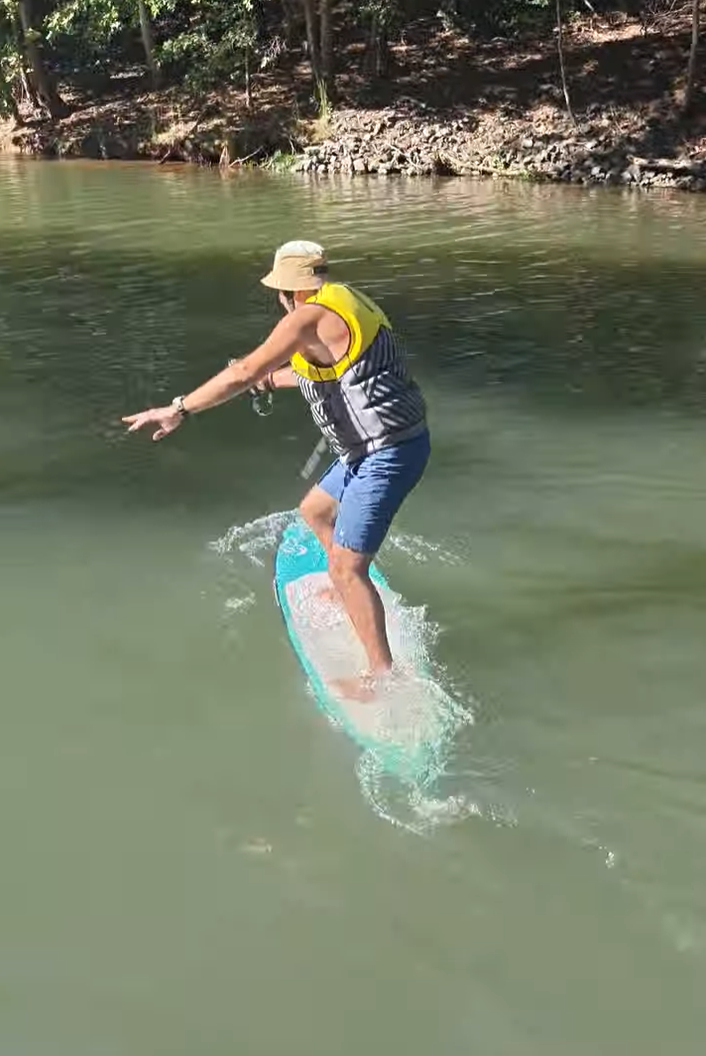
The Foilboost in gear three has significant power. I had to apply much more nose weight to keep the board from wanting to do a wheelie. Once I got up to about 9 mph and planed off, I began to fly for the first time. It felt great. Very similar to riding my Waydoo Evo. I had to be careful to modulate my height as the folding prop breaches very easily and then you lose power. I was able to recover easily and keep going.
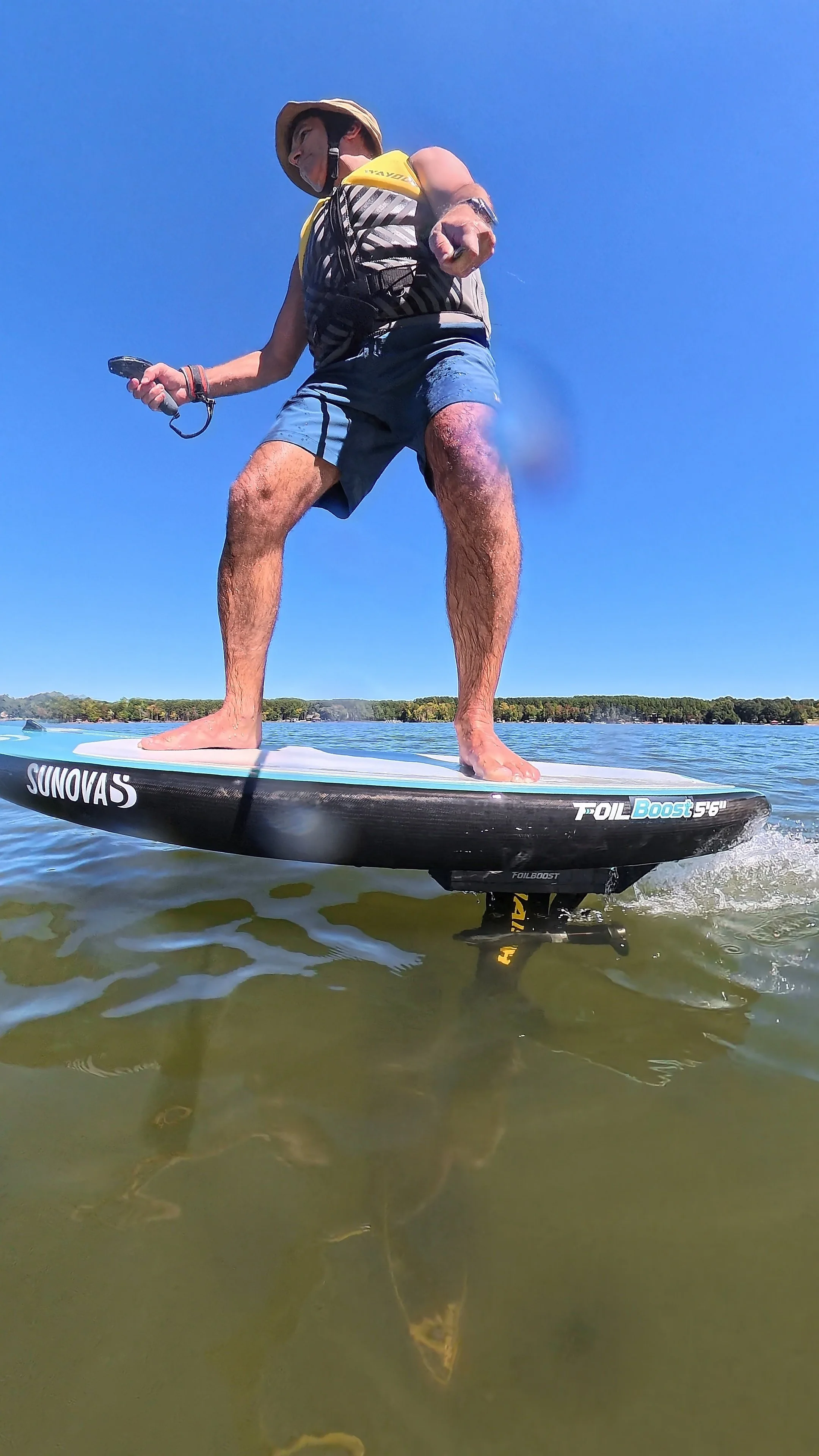
I got dialed in on the sweet spot for the right ride height. I bumped up the speed to about 12 mph, at which point I released the throttle and rose higher. I was able to glide and pump for a while. This was cool. Yes, the Foilboost adds some weight, so pumping is not as easy as on my wakefoil setup, but it was quite doable. Unfortunately, on my first ride, there were no other boats out on the lake, so no wakes to chase. I rode 1.46 miles and returned with the battery at about 50%.
Initial Impressions
I am thoroughly impressed with the Waydoo Foilboost. It is a very well-designed product that is purpose-built for enabling riders to get into waves with much less effort. I love the overall design, the familiar remote, the fact the kit comes with additional parts like multiple antennae transmitters, the tools to assemble, the extra mast mount rubber shims, and even the roll of tape for the transmitter.
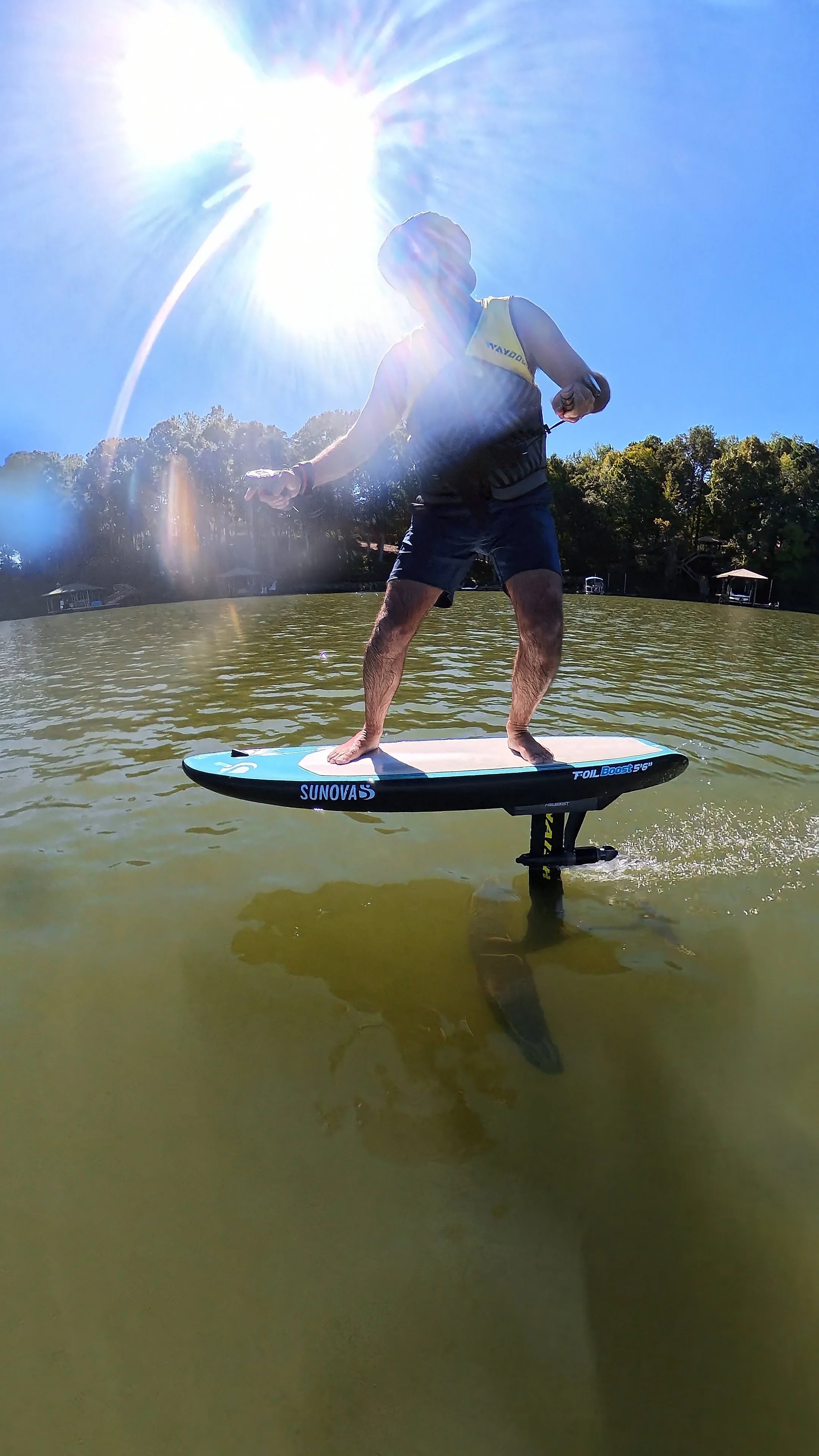
I am excited to catch some wakeboat waves and some ocean swells soon.
Areas for Improvement:
The remote battery level, as mentioned above, only shows the blue bars. I would like to see a firmware update to show actual battery level as a percentage in addition to the bars.
I found it necessary to be in gear 3 to get enough thrust to foil. That renders gears 1 and 2 useless. Maybe for a lighter rider or on a larger board and wing they would work, but for me, I needed the top gear.
The front of the Foilboost where it mounts to the board is a bit blunt, which means that when you touchdown on the water it creates a lot of drag and it feels like you are immediately hitting the brakes. I would like to see a nose cone or other piece that can be inserted to change the slope and make the entry point less abrupt.
Overall, the Foilboost is a great product. When compared to the other foil assist products in the market, Waydoo’s version is once again top-notch on the performance-to-value ratio. This is not a product for everyone; it is for experienced foilers looking to chase waves. If you are a competent foiler who wants a Foil assist, I would highly recommend you consider the Waydoo FoilBoost.